

TLDR — Key Points
Cardiac stun is a reversible myocardial dysfunction. The heart is alive but temporarily unable to contract.
It shows up on VA-ECMO as low EF, no pulsatility, poor MAP, and rising lactate.
It happens because of ischemia–reperfusion, severe hypoxia, prolonged shock, and sudden afterload spikes when starting VA flows too fast.
Cold prime and metabolic instability can worsen the picture — the problem isn’t Plasmalyte, it’s temperature and how fast I increase the ECMO flow.
You resolve it by slow-controlled ECMO initiation, correcting metabolic problems, supporting perfusion, and letting the myocardium recover.
The heart isn’t dead. It just needs time. ECMO gives it that time.
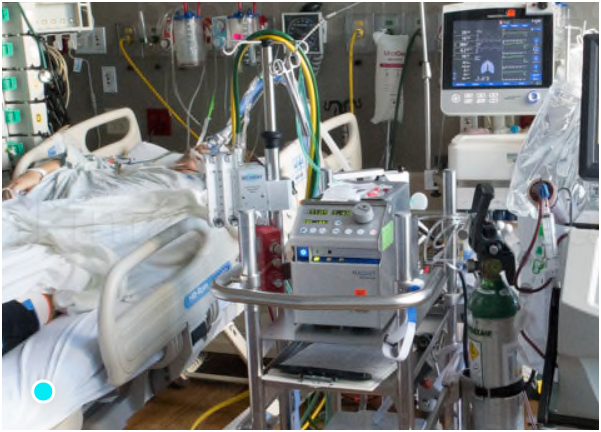
A few days ago, someone asked me a simple question:
“Hey Jon, what exactly is cardiac stun?”
I knew the usual bedside signs — weak squeeze, low stroke volume, almost no pulse pressure, lactate creeping up even with “good” circuit flow. But when I tried to give a clear, confident explanation, I realized I was only describing what it looks like, not what it is or why it happens.
So I went back, reviewed the physiology, double-checked the ECMO guidance, and asked my AI ECMO Educator GPT to help me tighten the concept. What came out is the version I wish I had ready in the moment, and the version I think early ECMO clinicians deserve: something practical, accurate, and actually usable at the bedside.
Here it is.
1. What Cardiac Stun Is
Cardiac stun is a temporary myocardial dysfunction after a major physiologic insult.
The myocardium is alive and well-perfused, but the muscle can’t generate an effective squeeze. It’s not infarction, it’s not permanent damage — it’s a ventricle recovering from shock, hypoxia, or reperfusion.
On VA-ECMO, it typically looks like:
Very low EF on echo
Minimal or absent pulsatility on the arterial line
Tiny stroke volume, even with full coronary perfusion
MAPs are completely dependent on ECMO flow and vasoactive support
Lactate that rises or clears slowly because forward flow is insufficient
The key idea:
The heart has oxygen. It has perfusion. It just doesn’t have the contractile strength yet.
ECMO doesn’t fix the heart — it carries the circulation while the heart repairs itself.
2. Why Cardiac Stun Happens
Several pathways lead to cardiac stun, and most ICU clinicians have seen at least one of them. The physiology is straightforward once you look at the sequence.
Ischemia–Reperfusion After Arrest
After downtime, the heart gets blood flow back — but the myocytes aren’t ready to contract. They need time to recover, redistribute calcium, normalize pH, and restore ATP levels.
Severe Hypoxia or Prolonged Shock
A ventricle exposed to prolonged underperfusion loses contractile reserve. Even after restoring oxygen delivery, mechanical output lags behind.
Abrupt Hemodynamic Shifts During VA-ECMO Initiation
This one is under-taught but very real:
When you start VA flows too fast, you instantly increase LV afterload.
A stunned or borderline heart may not be able to open the aortic valve against that pressure.
The result is:
No pulsatility
No forward stroke volume
A ventricle that looks even worse after ECMO is started
This isn’t ECMO “hurting” the heart — it’s ECMO exposing how little native output was left.
Systemic Inflammation and Vasoplegia
Post-arrest and septic physiology depress contractility globally. ECMO restores perfusion, but it doesn’t instantly reverse the inflammatory myocardial depression.
What About the Prime? (The Accurate Version)
I’ve heard (and once believed) the idea that:
“Plasmalyte doesn’t carry oxygen, so it can stun the heart if you start VA too fast.”
Here’s the fact-checked version:
Crystalloid prime doesn’t carry oxygen, but it mixes immediately with circulating blood.
The heart is not perfused with pure crystalloid in isolation.
ELSO does not list crystalloid prime as a cause of stunning.
The real factors are:
Cold prime: can transiently depress myocardial function
Rapid flow initiation: spikes afterload
Metabolic instability: acidosis, hypothermia, low calcium
So the teaching point is this:
Temperature and how fast you increase your ECMO flow matter far more than whether the prime is Plasmalyte.
3. How Cardiac Stun Resolves
You can’t “treat” stun directly — the myocardium simply needs time to recover. But you can create the conditions for recovery.
Controlled Flow Initiation
Start VA-ECMO gradually. Build flow slowly, allowing the LV to adjust and preventing an abrupt afterload hit.
Correct Metabolic Problems
The stunned ventricle won’t recover if the environment is hostile:
Normalize calcium
Correct acidosis
Maintain temperature
Optimize electrolytes
Many centers give calcium at initiation for this reason.
Support Perfusion
While the heart rests:
Maintain appropriate ECMO flow
Use vasoactive support judiciously
Monitor lactate and regional perfusion
Avoid unnecessary LV distention
Unload the LV When Needed
If the aortic valve isn’t opening and the LV begins to distend, intervene early:
Reduce afterload
Consider inotropes, IABP, Impella, or surgical venting, depending on your program
Watch for Signs of Recovery
You’ll know the heart is coming back online when you see:
The aortic valve opens intermittently
Pulse pressure returning
Stroke volume rising
Improved lactate clearance
Once you see pulsatility, the heart is re-engaging.
Closing Thoughts
Cardiac stun used to feel vague to me — something people mentioned, assumed, and moved past without a clear explanation. Being asked directly forced me to clarify what it actually is and why it shows up the way it does, especially during VA-ECMO initiation.
Here’s where I landed:
Cardiac stun is the myocardium saying, “I’m viable — I just need time.”
Our job is to protect the patient while the heart rebuilds its ability to generate mechanical work.
VA-ECMO gives the heart the chance to recover, and when it does, it’s unmistakable:
Pulsatility returns, the aortic valve opens, and the circulation begins to shift back toward native output.
That moment never gets old.