

Tokyo


Tokyo may be my favorite city in the world now.
It used to be Singapore, and I still love Singapore, but the humidity there is brutal. Tokyo feels different. It is huge, but somehow quiet. It is busy, but it does not feel chaotic. People move with purpose. Trains are clean. Streets are orderly. Even when there are people everywhere, the city still feels calm.
This is my second time in Tokyo, and I am loving it even more this time.
I am staying in a small hotel in the Shimbashi area. The room is small by American standards, but it works. It is clean, efficient, and practical. That seems to be a theme here. Space is used carefully. Nothing feels wasted.
The food has been phenomenal.
There are tiny restaurants everywhere. Some have just a few seats. Some are tucked into narrow streets or hidden in plain sight. Many seem to do one thing very well. You walk past a small doorway, look inside, and there is someone working quietly behind a counter with more precision than a lot of full restaurants back home.
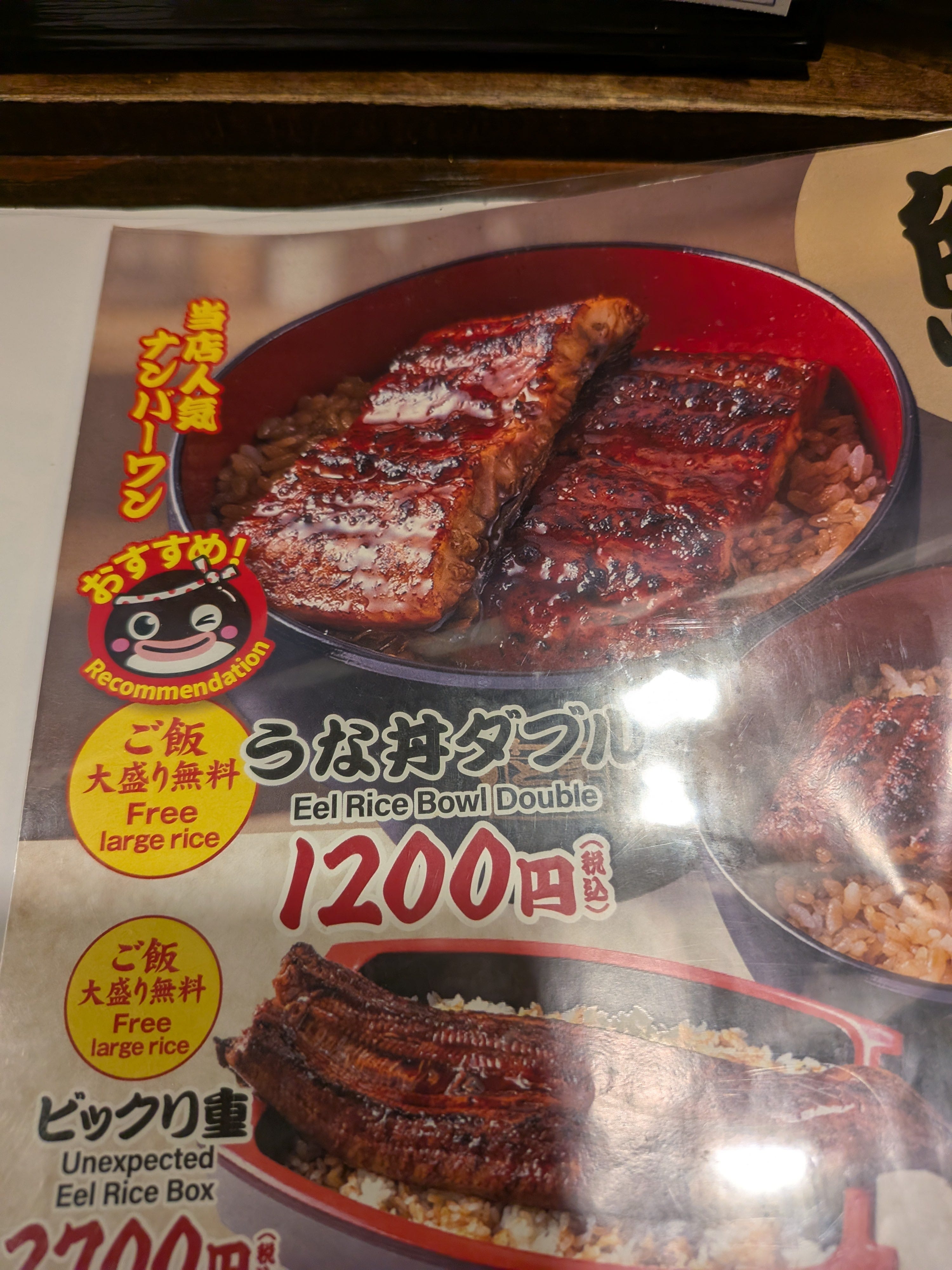
I went to dinner with colleagues and ate eel. It was excellent. Not just good, but memorable. The kind of meal that makes you slow down and pay attention.
Then there are the convenience stores.
I know this sounds ridiculous if you have only experienced convenience store food in the United States, but 7-Eleven in Japan is better than a lot of fast dining restaurants back home. The sandwiches are good. The rice balls are good. The drinks are good. The prepared meals are good. It is fast, clean, affordable, and reliable.


At one point, I got creamy corn out of a coffee machine. The same machine also had bone broth. In the United States, a machine like that would probably give you burnt coffee and something pretending to be hot chocolate. In Tokyo, it gives you hot corn soup and bone broth.
Everyone has been kind. Not loud. Not performative. Just kind. The taxi drivers are professional. The servers are polite. People seem willing to help, even with a language barrier. Taxis also do not cost an arm and a leg, which has been a pleasant surprise.
Tipping is different here, too. As an American, it is hard to turn that habit off, but here it feels unnecessary and even surprising to people. Service does not seem built around chasing tips. It feels built around doing the job well.
That has been one of my biggest impressions of Tokyo so far.
The city works because details matter. The trains work because details matter. The food works because details matter. The small hotel room works because details matter. Even a convenience store meal feels better because someone cared about the small things.
That mindset connects directly to ECMO.
Because ECMO is also built on details.
APELSO
I came to Tokyo for the 8th Annual APELSO Conference, held June 11 through 13, 2026. APELSO was packed with opening lectures, global ECMO updates, education sessions, mobilization talks, anticoagulation discussions, ventilation strategy, pregnancy ECMO, transport, and program development.


But the main theme was clear to me: ECMO is not just a machine. ECMO is a system.
A pump and oxygenator do not make an ECMO program. A program is built from trained people, clear roles, practiced responses, honest data, good communication, and a culture that can admit what it does not know.
One line that stuck with me:
Without data, all we have are opinions.
That is painfully true in ECMO.
ECMO is full of strong opinions. Ventilator settings. Anticoagulation. Cannulation strategy. Transport planning. Mobilization. Staffing. Specialist training. Everyone has a way they like to do things. But if we are not collecting outcomes, comparing practices, and challenging our assumptions, we may only be defending habit.
That is one reason ELSO registry work matters. It is also why education and certification matter. ECMO is too complex, too expensive, and too high-risk to expand without structure.
One of the strongest themes was early mobilization.
The message was not simply, “Walk the patient.” It was bigger than that. It was about reducing sedation, preserving strength, and aiming for survival that means something after the ICU. Getting someone off ECMO is not enough if the patient is left profoundly weak, delirious, and unable to recover a meaningful life.
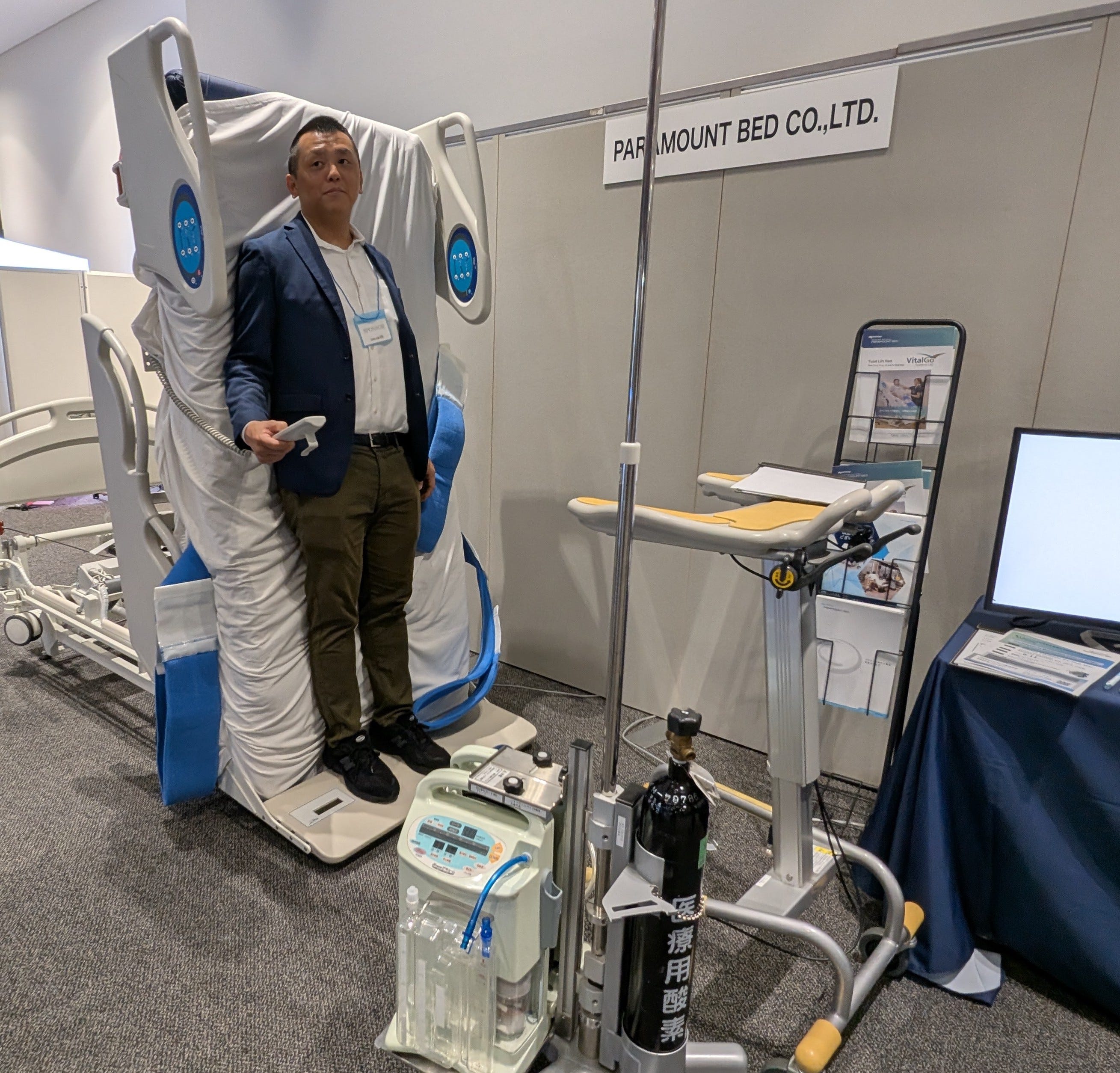
The talks on verticalization therapy and structured mobility were practical. Tilt beds, staged mobility, safety checklists, and team coordination all matter. But the bigger point was that equipment alone does not create a mobility culture.
A tilt bed helps. A special chair helps. A protocol helps. But none of it works if the team is afraid, untrained, understaffed, or unclear about who owns the process.
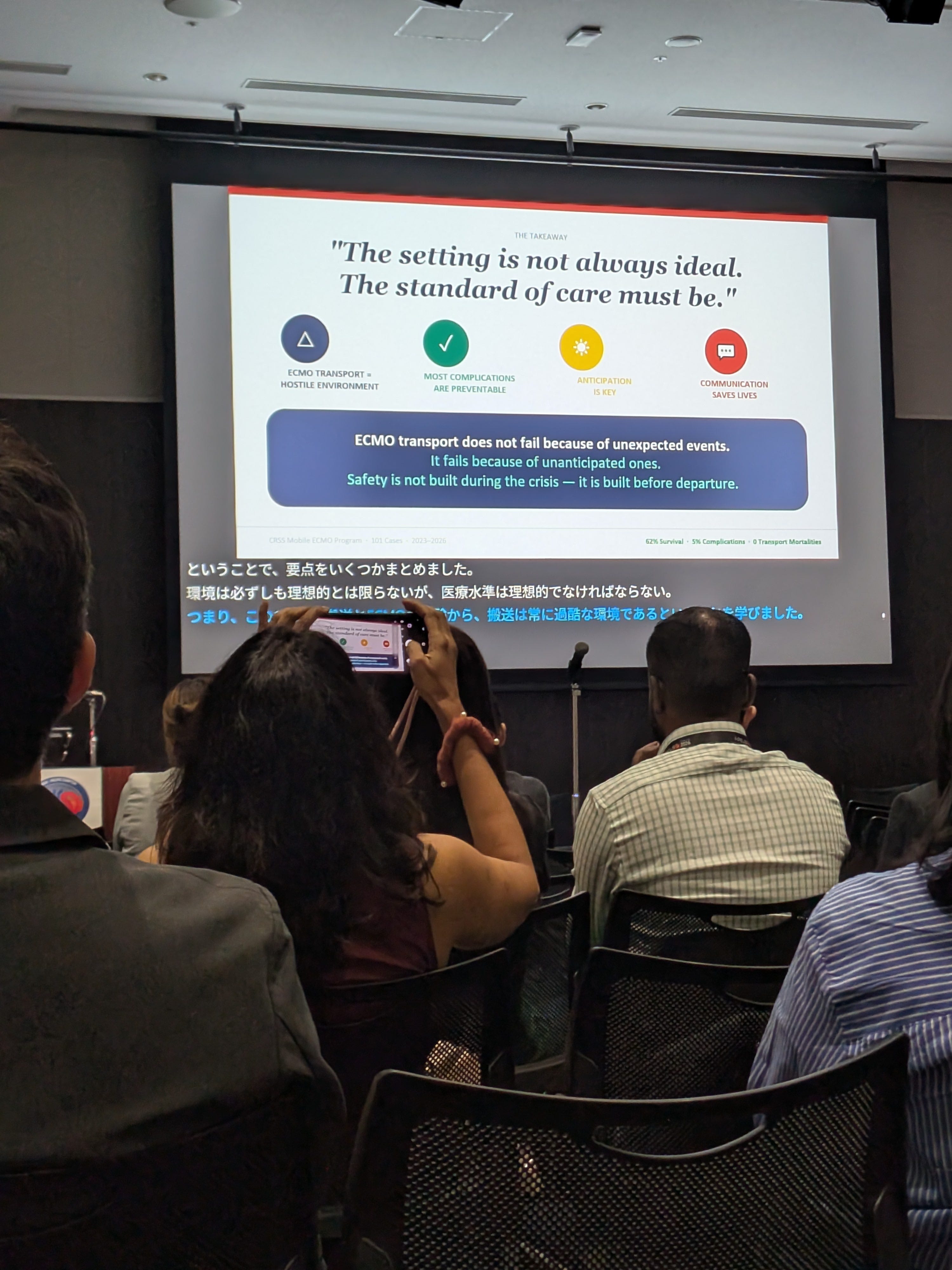
That same lesson showed up again in the transport sessions. The ECMO transport material was among the most useful content, whether for air, ambulance, or in-hospital transport. Transport is where ideal plans meet reality. Oxygen estimates may be wrong. Batteries may drain faster than expected.
The transport message was simple: safety is built before movement.
Check the oxygen. Check the battery. Check the power source. Check the backup plan. Check who is watching the cannulas. Check who owns the pump. Check who communicates with the driver, pilot, sending team, receiving team, and physician. That sounds basic until you realize how many disasters come from basic things being assumed rather than confirmed.
The nursing education sessions also stood out.
Nurses are not passive participants in ECMO care. They are often the first to recognize deterioration. They are at the bedside continuously. They see the patient, the circuit, the ventilator, the labs, the family, the sedation pattern, the bleeding, the clot burden, the neurologic changes, and the small signs that something is starting to shift.
Good ECMO nursing education cannot be limited to task training should not only ask, “What would you do?” It should ask, “What are you seeing? What do you think is happening? What else could explain it? What information do you need next? What is dangerous right now? What can wait?”
That is how expert thinking becomes teachable.
The anticoagulation discussion made the same point from another angle. Protocols matter, but protocols are not enough. ACT, aPTT, anti-Xa, platelet count, fibrinogen, hemolysis, inflammation, antithrombin, liver function, renal function, circuit inspection, bleeding, and clot burden all tell part of the story.
A single number cannot manage an ECMO patient.
The bedside picture matters. The circuit matters. The patient phenotype matters. The trend matters.
That is real ECMO. The anti-Xa may look fine while the oxygenator is telling a different story. The aPTT may be elevated, but the patient is inflamed. The protocol may point one way, while the patient in front of you is telling you to slow down and think.
The sessions on VV ECMO ventilation, pregnancy ECMO, and cannulation strategy added even more depth. The VV ECMO material reinforced the need to reduce ventilator-induced lung injury, minimize driving pressure, personalize PEEP, and avoid assuming that lungs cannot recover too early. The pregnancy ECMO talks were a reminder that maternal physiology changes the targets. Oxygenation, carbon dioxide, flow needs, cannula choice, anticoagulation, fetal monitoring, and delivery planning all become more complex.
I was tired, but it was the good kind. The kind where your brain is full because you actually heard things worth thinking about.
The big takeaway for me is that ECMO care is moving beyond the idea of heroic rescue. Rescue still matters. There will always be emergencies. There will always be crashing patients, hard cannulations, bad gases, clots, bleeding, alarms, transport problems, and difficult decisions.
But the future of ECMO is not just rescue.
It is systems. It is education. It is transport planning. It is nursing judgment. It is honest data. It is regional collaboration. It is known that buying equipment is not the same as building a program.
Tokyo has been the perfect place to think about that, because this city makes details visible. The calm is not accidental. The order is not accidental. The food, trains, hotels, taxis, and tiny restaurants work because people pay attention to the small things.
ECMO is the same. The details are not decoration. The details are the care.
There was far more than I could include in one article. I will continue sorting through the sessions, notes, and ideas as part of the ongoing ECMO 143 learning journey.
ECMO 143 creates practical ECMO education, articles, and learning tools for clinicians who want to better understand the work behind the circuit. Subscribe to LifeSupport.Training to be notified when new articles from ECMO 143: AI-Assisted Journey are published.