

The heart has 4 valves and 4 chambers. The valves are one-way “doors” that keep blood moving forward and prevent backflow.
To understand how blood moves through the heart, we can number the valves in the order in which the blood passes through them as it travels from the venous to the pulmonary and then to the arterial side.
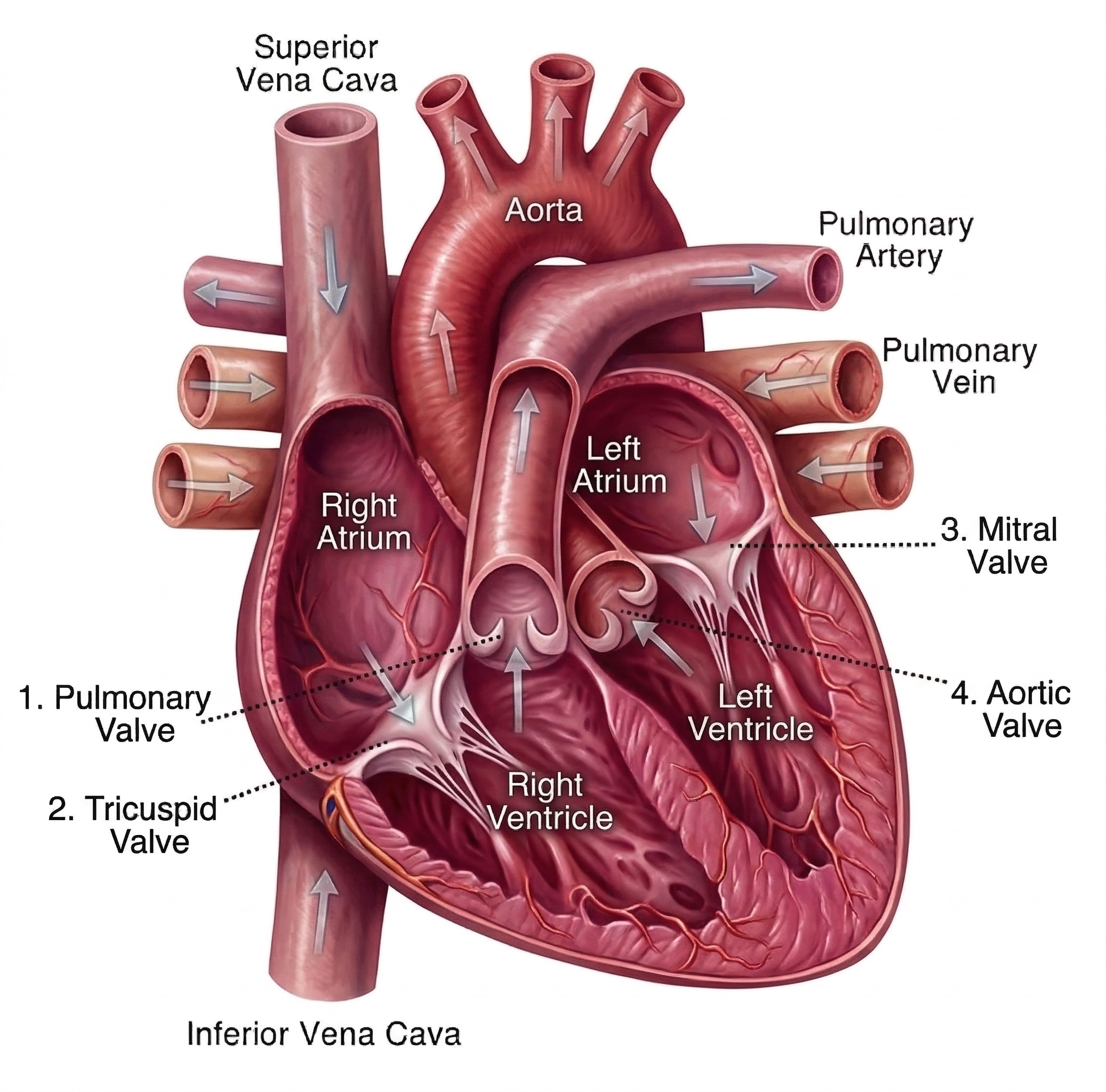
The Sequential Order of Heart Valves
Tricuspid Valve: The first valve. It allows deoxygenated blood to flow from the Right Atrium into the Right Ventricle. Tri=3 leaflets for the valve
Pulmonary Valve: The second valve in the sequence. It opens to allow blood to be pumped from the Right Ventricle into the Pulmonary Artery on its way to the lungs. There are 3 leaflets for the pulmonary valve.
Mitral Valve (also called the Bicuspid Valve): After the blood is oxygenated in the lungs, it returns to the Left Atrium and passes through this third valve into the Left Ventricle. Bi (cuspid) = 2 leaflets for the valve.
Aortic Valve: The final valve. It opens to allow oxygen-rich blood to leave the Left Ventricle and enter the Aorta, which distributes it to the rest of the body. 3 leaflets for the aortic valve.
Two Quick Memory Tricks
Here are a few solid memory tricks to help you remember the right-to-left valve sequence
(Tricuspid → Pulmonary → Mitral → Aortic):

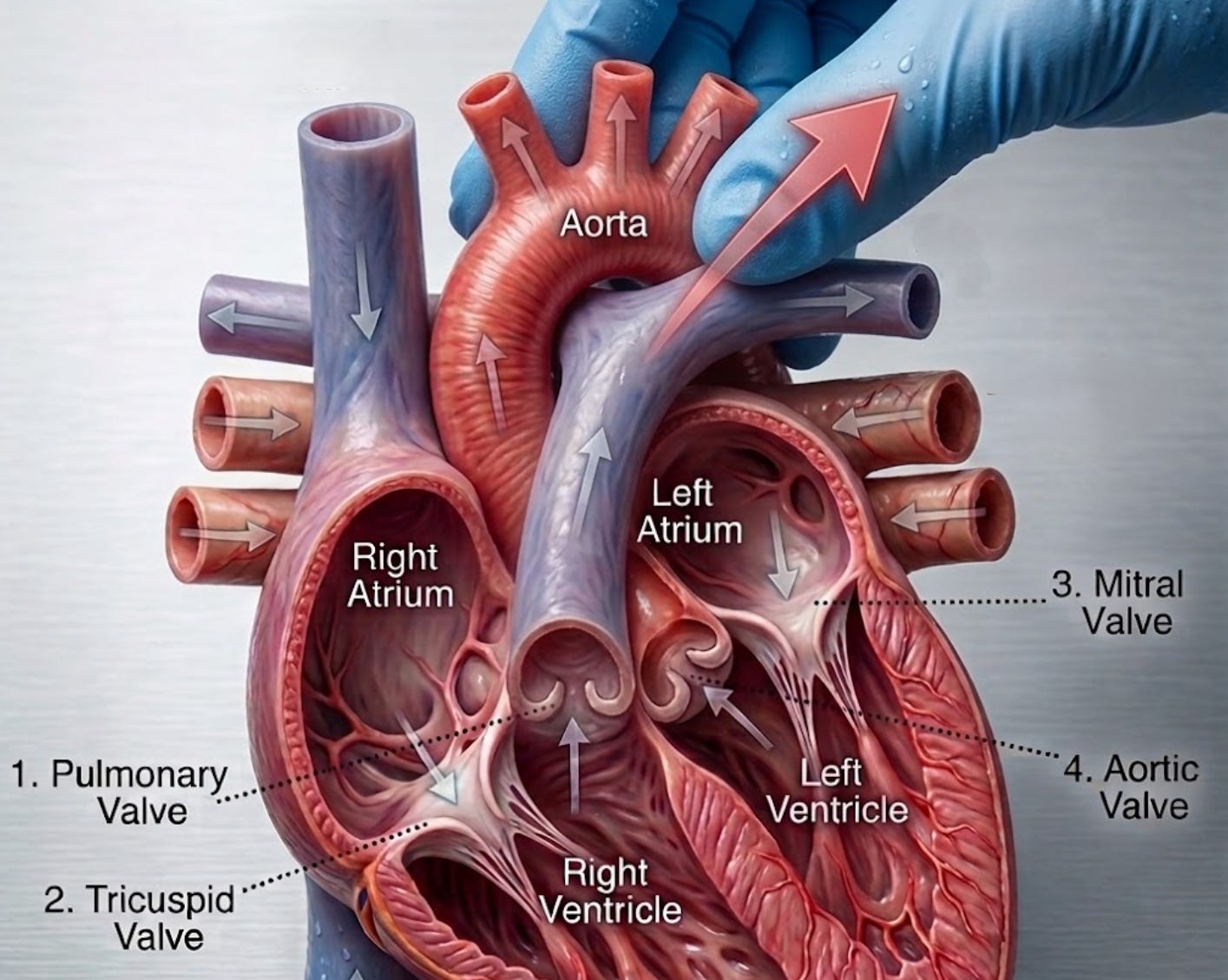
Bonus Valve Information
The Rule of Three
3 valves have 3 leaflets:
Tricuspid
Pulmonary
Aortic
This design allows a wide opening for flow and tight closure under pressure.
The Mitral Exception
The Mitral valve has 2 leaflets.
It sits on the left side of the heart and handles the highest pressures (transvalvular).
It is supported by chordae tendineae and papillary muscles, which prevent it from prolapsing back into the left atrium.
Why This Matters at the Bedside
If you understand the sequence, you can troubleshoot faster.
Example:
Pulmonary edema? Think Mitral or left side problem
High CVP and congestion? Think Tricuspid or right side problem
No pulse pressure on VA ECMO? Think Aortic valve not opening
Start with flow. Then find where it’s blocked or leaking.
Learn more
If you want more ECMO breakdowns like this, make sure you are subscribed to this newsletter, ECMO 143: AI-Assisted Journey. I’ll keep sharing what I’m learning along the way.
You can also use my free Custom GPT, AI ECMO Educator, an evidence-based ECMO and ECPR educator for ICU clinicians and trainees, covering physiology, cannulation, anticoagulation, circuit management, and troubleshooting. Sources include ELSO, PubMed, AmSECT, and leading centers. Version 5.2 (2/21/26) | Supports 50+ languages.
What stands out isn’t just the clarity,
it’s the emphasis on flow.
Once you understand direction,
everything else becomes a question of where it’s disrupted.