

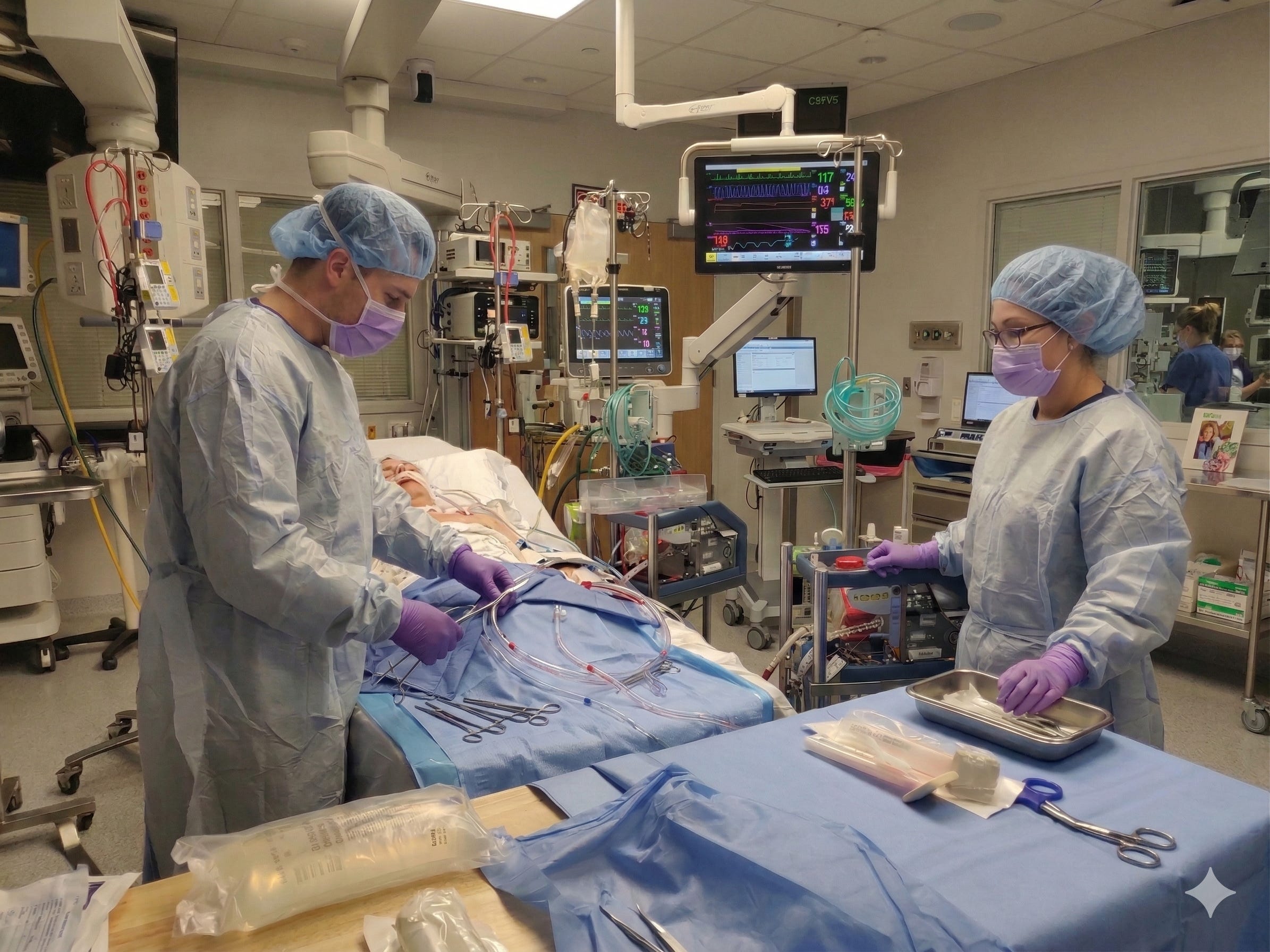
Over several recent ECMO orientation shifts, I was reminded of how much the role changes when you are helping someone else orient.
At the beginning, I stay close to the center of the action. I demonstrate procedures, explain decisions, and guide things step by step.
As the orientee gains experience, that starts to shift. I step back more. They lead the workflow, and I watch the patient and the circuit. Eventually, my role becomes supervision. They do the work, and I become the safety net. That part takes discipline. The natural urge is to jump in and do it yourself. Good orientation means resisting that urge while still keeping the patient safe.
In this case, the orientees were already experienced ICU nurses, and over several shifts, it was easy to see their confidence grow. What I appreciate about ECMO orientation is that it often becomes shared discovery. They asked good questions, and not every answer was obvious. That gave us a chance to pause, look things up, and learn together.
I’ve been fortunate to work with physicians, nurses, and ECMO specialists who take time to teach. Being on the receiving end of that makes it easier to pass something along. In critical care, the goal is not to know everything. It is to protect the patient, stay curious, and keep learning. Some of those questions also led us back to the lab signs of hemolysis in ECMO patients, which I wrote more about in “Hemolysis on ECMO: What It Means at the Bedside.”
Learn more
For a deeper dive into becoming an ECMO Specialist, visit my website: ECMO 143: AI-Assisted Journey.
I built a Custom GPT, AI ECMO Educator. It is free to use and provides evidence-based ECMO and ECPR guidance for ICU clinicians and trainees, covering physiology, cannulation, anticoagulation, circuit management, and troubleshooting. Built on sources like ELSO, PubMed, AmSECT, and leading centers. Version 5.2 | Supports 50+ languages.
Disclaimer
This content is for educational purposes only and does not replace clinical judgment, institutional protocols, or consultation with your ECMO team.